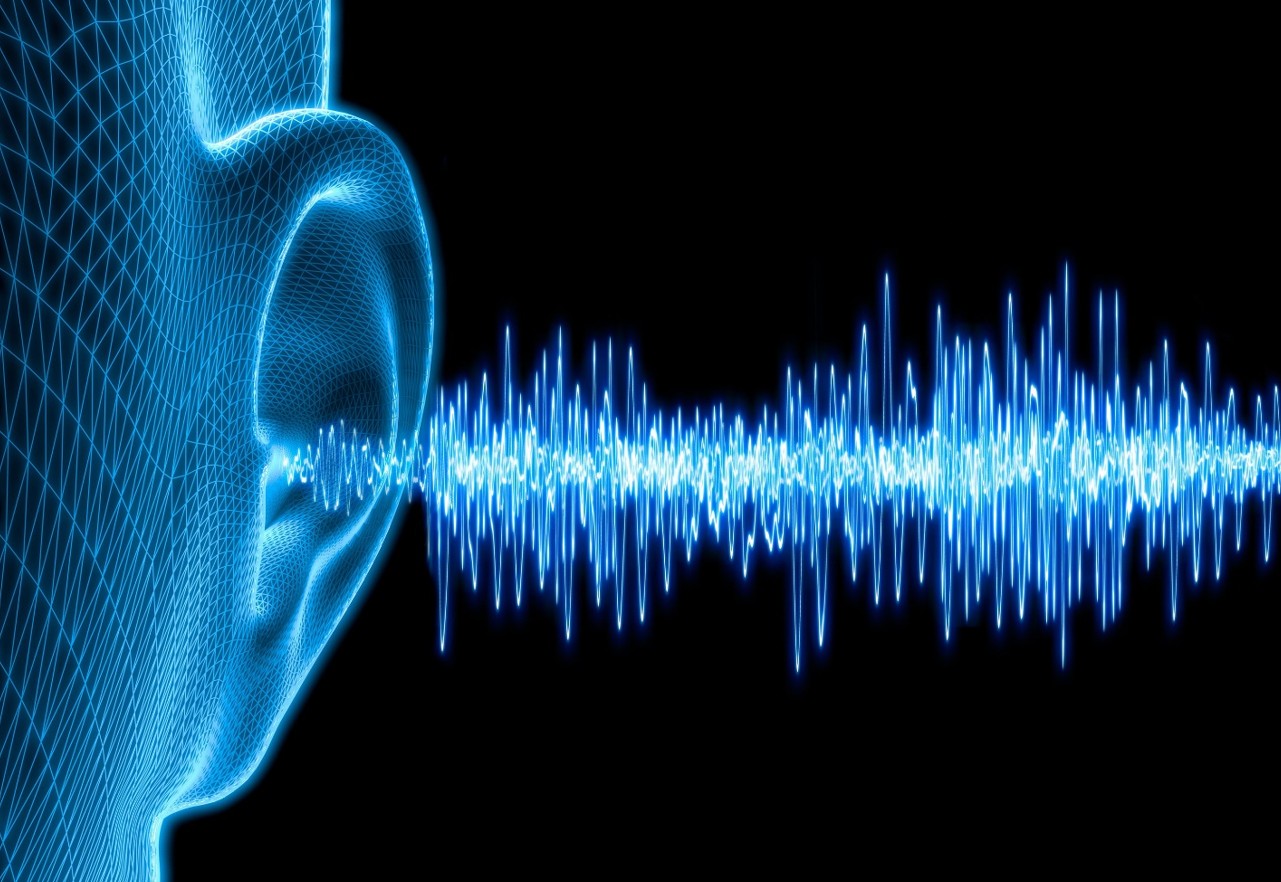
Image above shows sound waves oscillating to human ear for visualization (Scientific American, 2024).
If you clap your hands inside of a quiet room, something invisible explodes outward at 761 miles per hour. You cannot see it. To some extent you can feel it, but it moves through the air in every direction until it reaches your ear. The movement is not magic, but it is air particles compressing and spreading apart. What we call “sound” is simply just pressure traveling through space.
But here is the real question: how do you take something invisible to the human eye and turn it into something that can travel across a wire?
This week, I began to understand that digitization is not just about computers and modern technology. It is about translation. Digitization is the process of taking something continuous and what some people call messy, from the real world and converting it into a system that can be stored, transmitted, and reconstructed.
One of the earliest examples of digitizing language was Morse code.
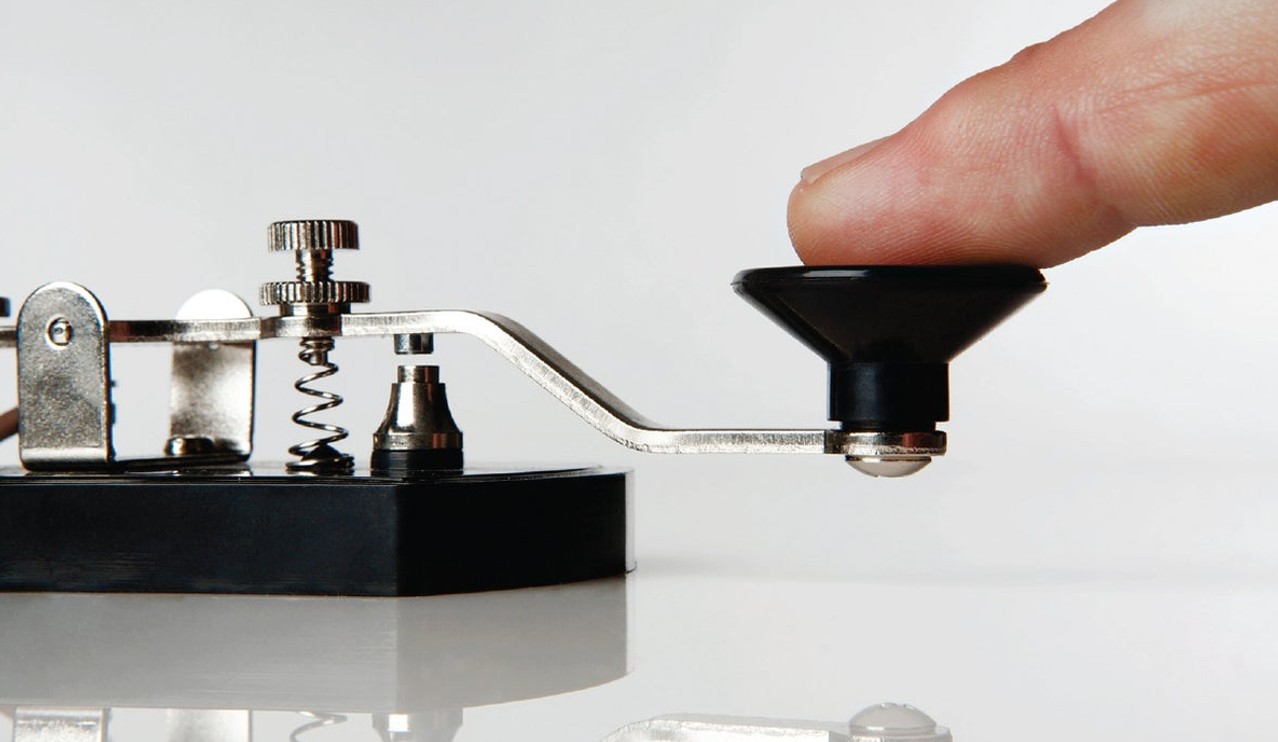
Image above shows the telegraph, which was how Morse code was transmitted (Scientific American, 2023).
Before the telegraph, messages had to move physically. A letter could only travel as fast as a horse, pigeon, or ship. At the time, distance controlled the speed of communication. Morse changed that by reducing language into timed pulses. Short signals and long signals, dots and dashes.
The genius of Morse code was not complexity. It was its simplicity.
A dash was about three times as long as a dot. Silence between signals had timing rules, and the 3 to 1 ratio allowed for flexibility. Beginners could send messages slowly at their own pace, while experts could speed up the language. The structure of Morse code reduced user errors while remaining adaptable. Language was no longer ink on a paper. It became electrical pulses moving through copper wires at great distances.
Morse code is digitization applied to text.
Reality, which is this case is speech and language, was broken into discrete units. Instead of infinite variations of tone and inflection, you had two possible signals: on or off. Short signals or long signals, dots or dashes.
But sound itself is different.
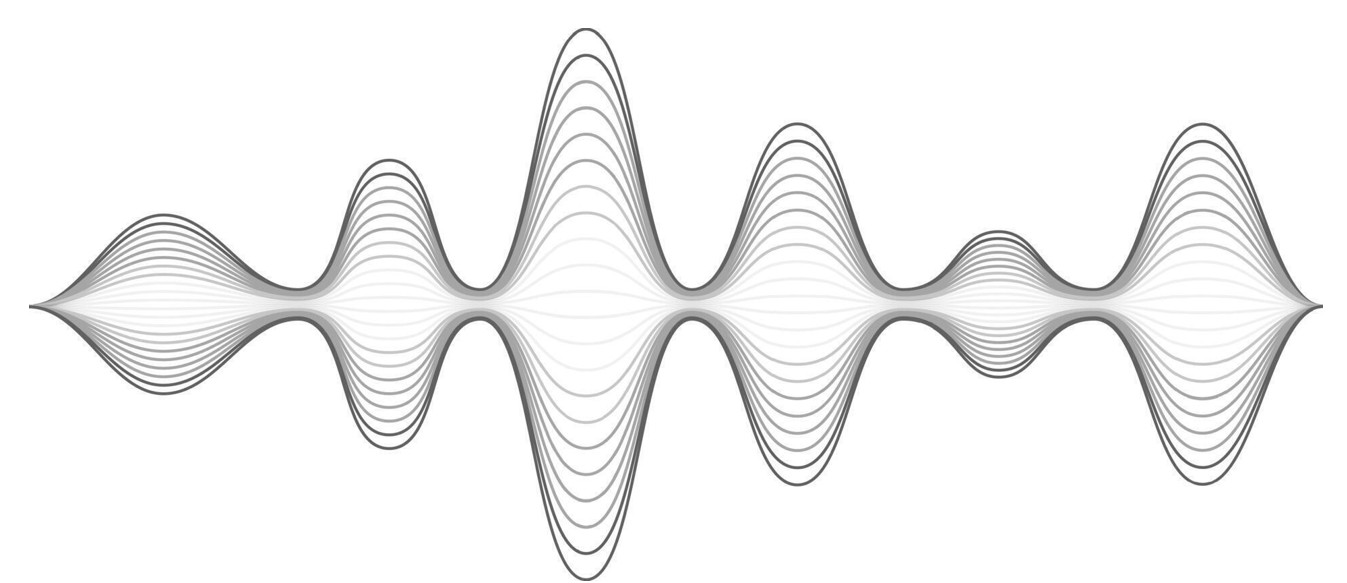
Sound is not naturally binary, it is continuous. It is a pressure wave made of compressions and rarefactions. When a balloon pops, high pressure air rushes outward, leaving a low-pressure void behind it. That cycle will repeat itself dozens of times all in a fraction of a second. A running faucet produces a continuous wave, and a violin playing 440 hertz produces 440 pressure cycles every second.
Image above shows a sound oscillation, in which you can visually see the peaks and valleys (Vecteezy, 2024).
When microphones capture sound, they do not capture the air. What they do capture is the movement. A diaphragm vibrates when pressure hits it. That vibration then becomes an electrical signal. In early telephones, this signal was analog, meaning it was infinite. The electrical current changed smoothly to mirror the sound wave.
Alexander Graham Bell’s early telephone worked by turning vocal vibrations into a fluctuating current that traveled down a wire and moves another diaphragm on the other end. Sounds like a lot, I know.
But in theory, this was perfect. The electrical signal looked like the sound wave.
But here is the tradeoff.
When electricity travels through a wire, it meets friction. Friction produces heat, and heat weakens the signal. As a line grew longer, the voice became quieter, and more difficult to hear. Engineers added analog amplifiers, but amplifiers also boosted everything, including noise. Noise is also known as static.
With analog, you cannot separate signal from noise, and if you amplify it, you amplify both.
This is where digitization becomes powerful.
Instead of transmitting the entire continuous wave, digital systems can sample it. They take measurements at specific intervals and convert them into numbers. Those numbers are also represented as binary values, maybe you’ve heard of them. Ones and zeros. If noise interferes slightly, the system can still recognize whether the bit was meant to be a 1 or a 0. The message can be reconstructed cleanly and clearly because of this.
Alternatively, digitization comes with its own cost.
When you sample sound, you must choose how often to measure it. Sample too slowly and you can lose detail. If you sample at a lower bit depth, you can lose subtle variations. That is why music over a cell phone call sounds compressed and flat. Phones only transmit frequencies within the human speech range to save bandwidth. Everything outside of that is removed, compressed down.
Clarity over distance, error connection, encryption and speed.
Subtle texture, and the full richness of the original pressure wave.
Morse code simplified language to transmit it faster than methods done prior, analog telephones tried to mirror reality exactly but struggled with distance. Digital systems today sacrifice continuity for stability.
Digitization is not about perfect; it is about tradeoffs.
When we convert text or sound into digital form, we are making choices about what matters most, accuracy or efficiency? Details or reliability.
What fascinates me the most is that the process has not changed since the first clay tablets. We are still taking reality and breaking them into symbols that systems can understand, the only difference is the scale and speed. The world around us is continuous, but the digital world is structured. Every time we convert one into the other, something is gained, and something is sacrificed.
Understanding that process makes it clear that digital systems are not magic, they are translations, and every translation changes the original.
“Scientists Create Pockets of Music from Inaudible Ultrasound Waves.” Scientific American, 2024, https://www.scientificamerican.com/article/scientists-create-pockets-of-music-from-inaudible-ultrasound-waves/
“How to Learn Morse Code–Semiconsciously.” Scientific American, 2023, https://www.scientificamerican.com/article/how-to-learn-morse-code-mdash-semiconsciously/
“Overlapping Grey Curved Lines Creating a Visual Representation of Sound Waves Oscillating with Varying Amplitude on a White Background Symbolizing Audio Frequencies.” Vecteezy, 2024, https://www.vecteezy.com/vector-art/68226855-overlapping-gray-curved-lines-creating-a-visual-representation-of-sound-waves-oscillating-with-varying-amplitude-on-a-white-background-symbolizing-audio-frequencies
Tool used: ChatGPT (GPT-5.2) Purpose: Structural feedback, grammar suggestions at the end, and title suggestion. All writing and ideas are my own.