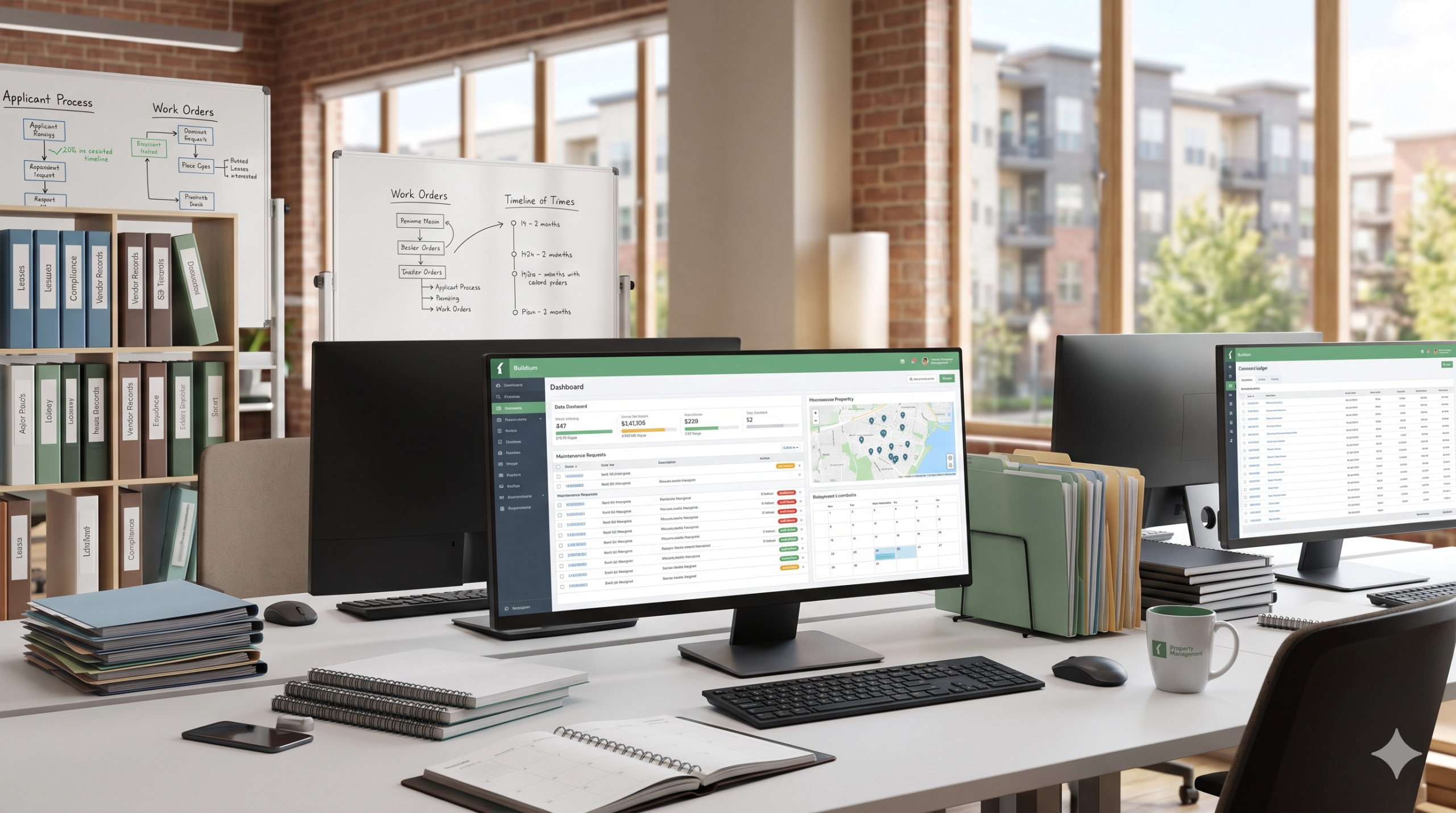
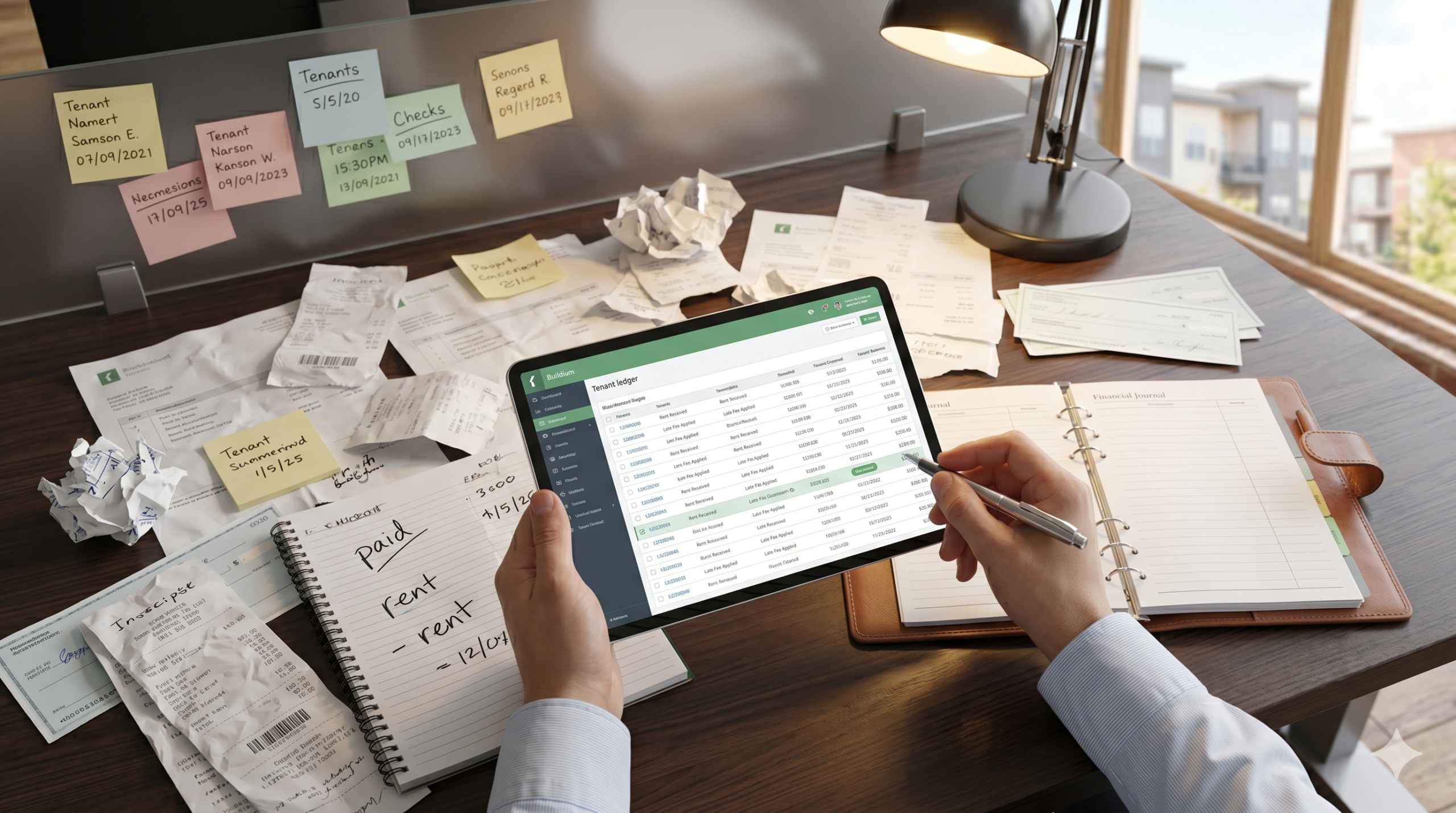
Property management looks a lot easier from the outside than it is. A lot of people think the job is basically collecting rent, answering tenants, and calling someone when something breaks. That is a part of it, but the part people do not always see is the amount of tracking, compliance, and projects that happen behind the scenes.
That was the reason I wanted to talk about Buildium. It is not the most exciting software to someone who has never dealt with or had interest in property management, but when you manage rentals, it makes sense right away. There are too many things going on at once to only rely on texts, spreadsheets, paper files, and memory.
In a normal property management setup, rent has to be tracked, vacant units need to be coordinated and listed, applications have to be reviewed, leases need to be drafted and sent, and work orders need to be followed up on. Then there are notes, tasks, tenant messages, owner questions, and ledger balances. Even if each task may seem simple on its own, the problem is managing hundreds of them at a time and following through on each of them in between everything else.
For the workshop, I wanted to show what Buildium looks like from the administrator’s point of view instead of just talking about it. I went through the basics like adding a property, listing a vacant unit, looking at applicants, accepting one, setting up their lease, and then going into work orders, notes, tasks, and the ledger. That part made the topic feel more real because it was not just a general idea about software. It showed how the system is used, and how much time it saves.
The listing part stood out to me since vacancy is a big deal in property management. If a unit is empty, the property is losing income until someone moves in. Buildium helps keep that process organized from the listing to the applicant to the lease. It still takes a person to review and perform those actions with skill, but the software keeps the steps from being all over the place.
Work orders are another part where software is really useful. This is one of the easiest areas to lose track of things because maintenance requests do not always come in neatly. A tenant might text about a leak, call about a broken appliance, or mention something while talking about a completely different issue. If there is no system, that request can easily get buried. With Buildium, the work order can be entered, assigned, updated, and saved under the property and unit/lease. That way there is a record of what happened instead of everyone trying to remember it later.
The ledger is not the most fun thing to explain, but it is probably one of the most important parts. Rent charges, payments, credits, late fees, and balances all have to be accurate. When the ledger is wrong, it creates problems for everyone. The tenant may think they paid, the manager may think they did not, and the owner may be looking for answers. A digital ledger makes it easier to check the account and see what is actually going on.
I also see this from my own work experience as well. I work as a portfolio manager now, and I used to be a property manager. I still use Buildium to help train the property manager at my job. So I know the software is helpful, but I also know it is not magic. If someone does not update the work order, enter the note, or check the ledger, the system will still have missing information. Buildium gives you the place to organize everything, but the person using it still has to do the job correctly.
That is where the digital side of property management is interesting. A system can make the job easier to follow, but it can’t make up for someone not paying attention. If the process is bad before it goes into the software, it can still be bad after. The advantage is that Buildium gives people a better chance to catch mistakes, follow up, and keep records in one place.
There are downsides too, and data privacy is one of them. Buildium can store a lot of important private information, including leases, tenant personal information, payment methods, and private messages. If that information ever got exposed, it would be a real problem both for the tenant and company. Another risk is relying too much on the system. If the internet went down, then you would not be able to use the software. That’s why having systems outside of the software is also important.
Tenant portals are also helpful, but they can also make communication less personal. Sometimes a tenant does not want an online message. They may need a phone call or a real in person conversation, especially if the issue is serious. Software can organize communication, but it should not replace simple human interactions.
I would still rather use Buildium than try to manage everything through random messages, paper, and spreadsheets. Property management has too many small details for that. Having rent, listings, applicants, leases, work orders, notes, tasks, and ledgers in one system makes the job easier to manage. At the same time, the software is not the manager, it helps organize the work, but the person still has to use judgment to actually manage the property well.
Tool used: ChatGPT (GPT-5.2) Purpose: Structural feedback, grammar suggestions at the end, and title suggestion. All writing and ideas are my own.