Everyone talks about how digital systems are making everything more efficient, but this week made me realize that it’s not all that simple.
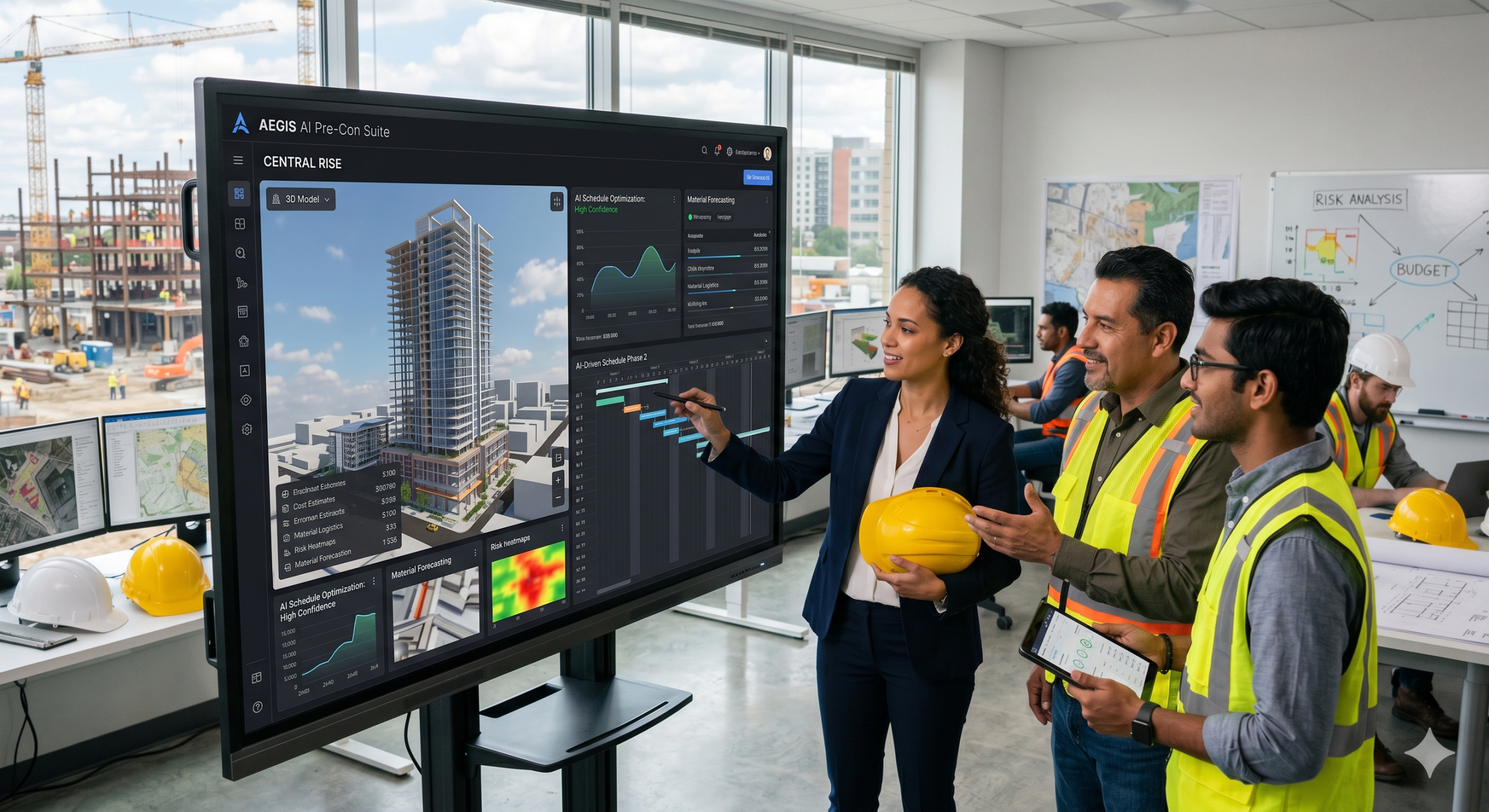
I related to Adam’s presentation on virtual design the most given my background in real estate and development. He showed examples of software like Bluebeam and Navisworks that large developers and builders use for estimating, pricing, and planning out projects before anything gets built. What made it interesting to me wasn’t just hearing about it in the presentation, but visually seeing how it works from the examples he provided. You can see visual examples of how clash detection catches issues before they turn into change orders. He also showed examples of how site maps organize everything, and how materials and layouts are planned out in detail which improves the project communication.
Honestly, when you look at it like that, it makes a lot more sense why builders invest heavily into these programs. If you can catch problems before construction even starts, you save money, avoid delays, avoid change orders, and have the whole project run a lot smoother. From a development standpoint, that is huge because it directly affects the numbers.
However, all of that works only if people actually know how to use it.
Digital systems sound great in theory, but there’s a big gap between having software and using it the right way. There’s a lot of education involved, especially in the construction field where technology is more foreign compared to other industries. Even if a few people understand it, they still need to be able to explain it clearly to everyone else involved. If that communication isn’t there, the whole system starts to lose its value quickly.
That’s why I believe digital systems are strong, but also weak in the same areas. They are extremely good at efficiency, faster than anything we have right now, but the software itself is not enough to work in the real world. It’s the execution and education from the people who create and use it that derives its value. In the case of AI agents, they rely on structure, inputs, and rules, but once something falls outside of that, they don’t adapt the same way a person can.

In the Go video, we watched a perfect example of how that plays out today. The game itself is simple, but the number of possible moves and patterns is so much higher than games like chess. AI struggles more with a game like Go compared to chess because it can’t just calculate everything, it needs to recognize patterns and make decisions based on the remaining possible outcomes. When there’s over 300 moves in the first play, that becomes extremely difficult for an AI to simulation all the potential outcomes. In the case of humans, that’s something we can do better naturally through instinct and pattern recognition; however, machines need time and training to figure that out.
After this class, I’d say I trust digital systems more, but only in the right situations. For large development projects, having an AI agent will make a lot of sense if a human is the one using it as a tool to speed up their work. When you can prevent problems early, you’re saving time and money which is the primary goal when advancing society. For smaller projects on the other hand, it might not be worth it. The cost of using all this technology and paying professionals may cost even more than the problems you are trying to avoid in the first place.
That’s the part that most people overlook.
Digital systems aren’t some perfect solutions that works for everything. They’re tools, and like any tool, they only work well if you use them in the right situation and know what you are doing so you can spot their mistakes.
Tool used: ChatGPT (GPT-5.2) Purpose: Structural feedback, grammar suggestions at the end, and title suggestion. All writing and ideas are my own.