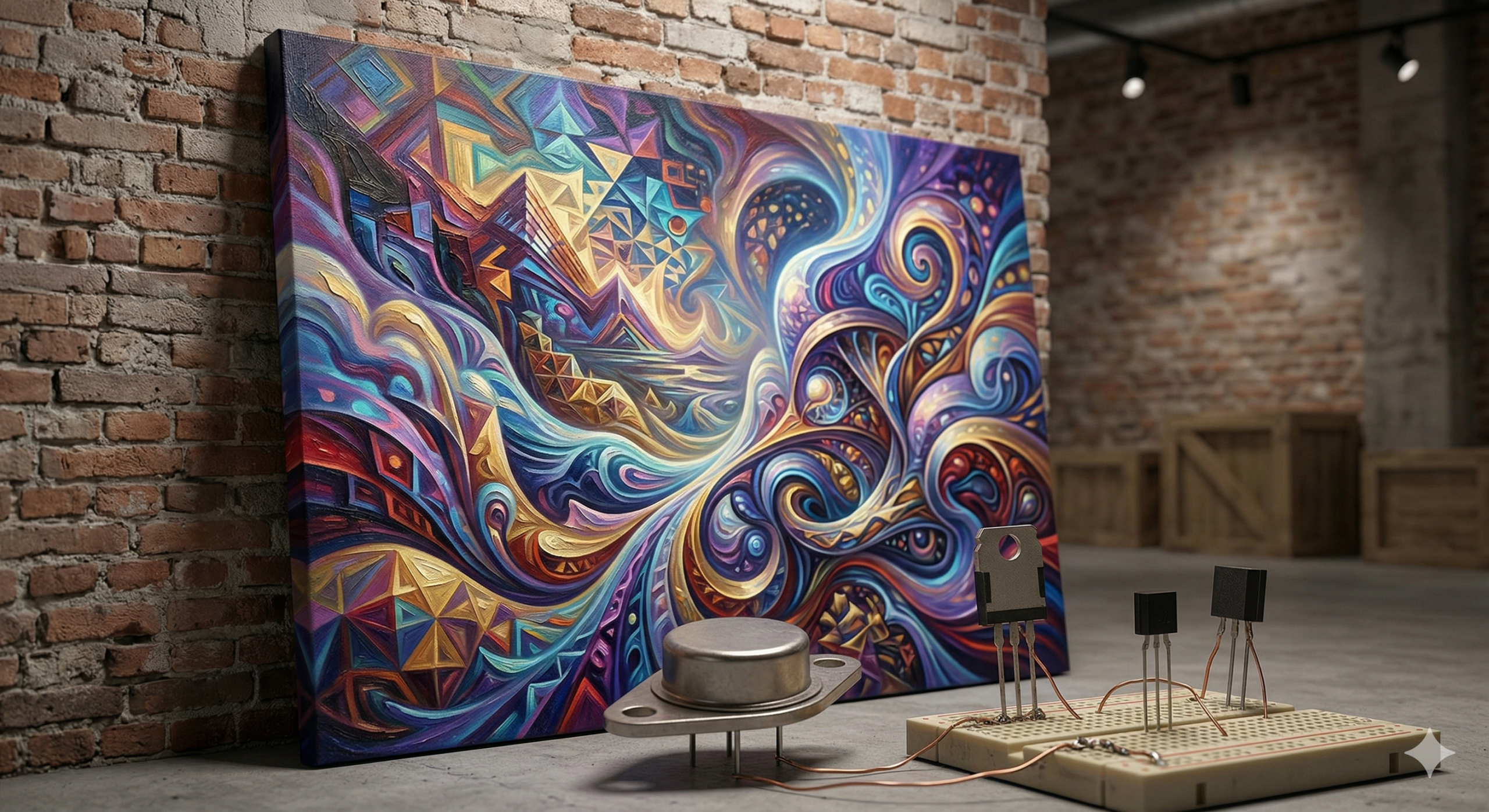
If you ask someone to create something, it is usually done with a human process. For example, like an artist painting a canvas, or someone coming up with an idea from scratch and turning it into something real. That feels original and personal, but when you ask AI to do the same thing, like generating art, the results begin to get strange. If you were to then ask the LLM to describe what it likes about the art it created, it often creates an output that sounds like an artist describing their own work, even though there is no actual understanding behind it creatively. This is where it starts to become clear that what feels like creativity is just a structured output that it created based on the prompts and patterns it has been trained on.
Once you start looking at AI image generation this way, the idea of what it means to be digital becomes a lot clearer. Digital systems are not meant to understand anything, rather they are taking information and representing it in a way that can be processed with the least noise possible. Instead of dealing with continuous real-world signals, they break down the information to an exact, countable value, often 1s and 0s. At the simplest level, it comes down to a system that can only be on or off, like a light switch and bulb.
When you look at how modern electronics have developed, you’ll notice that accessibility has become more common with less complicated ways to use them. Before transistors, systems relied on vacuum tubes which were large, expensive, and required a significant amount of power just to operate them. They also generated a lot of heat which limited how closely they could be placed together. Communication systems using these tubes were inefficient, and long-distance signals often required multiple stages of amplification just to remain clear, in some cases even involving a person having to be in the middle to repeat the message. Everything did work at the time, but it was not scalable.
The transistor completely changed that.
Instead of relying on bulky components, transistors provided a small, efficient, and reliable way to control those electrical signals. What makes them so important is not just their size or efficiency, but the way they function in electronics. A transistor acts as a switch, so it is either allowing a current to pass through, or it is not. That binary behavior is what makes technology often digital in nature.
Binary in the sense of electronics is often a counting system that uses two digits, 1 and 0, instead of an infinite amount. Each position represents a power of 2, which is why numbers look different but still follow a structure. For example, the number 1011 in binary means 11, and 111 represents 7. If you were to add these two (1011+111) together, they follow the same logic of carrying over the 1 like in normal addition, however you can only use 1s and 0s. The result is 10010 which adds to 18.
The importance of binary is not just the math itself, but how it connects to the physical hardware. Each binary digit corresponds directly to a transistor. A 1 represents a transistor that is on, while a 0 represents a transistor that is off. This creates a direct link between abstract numbers and physical transistors. From there, more complex behavior can be built using logic gates, which s why modern electronics have billions of transistors.
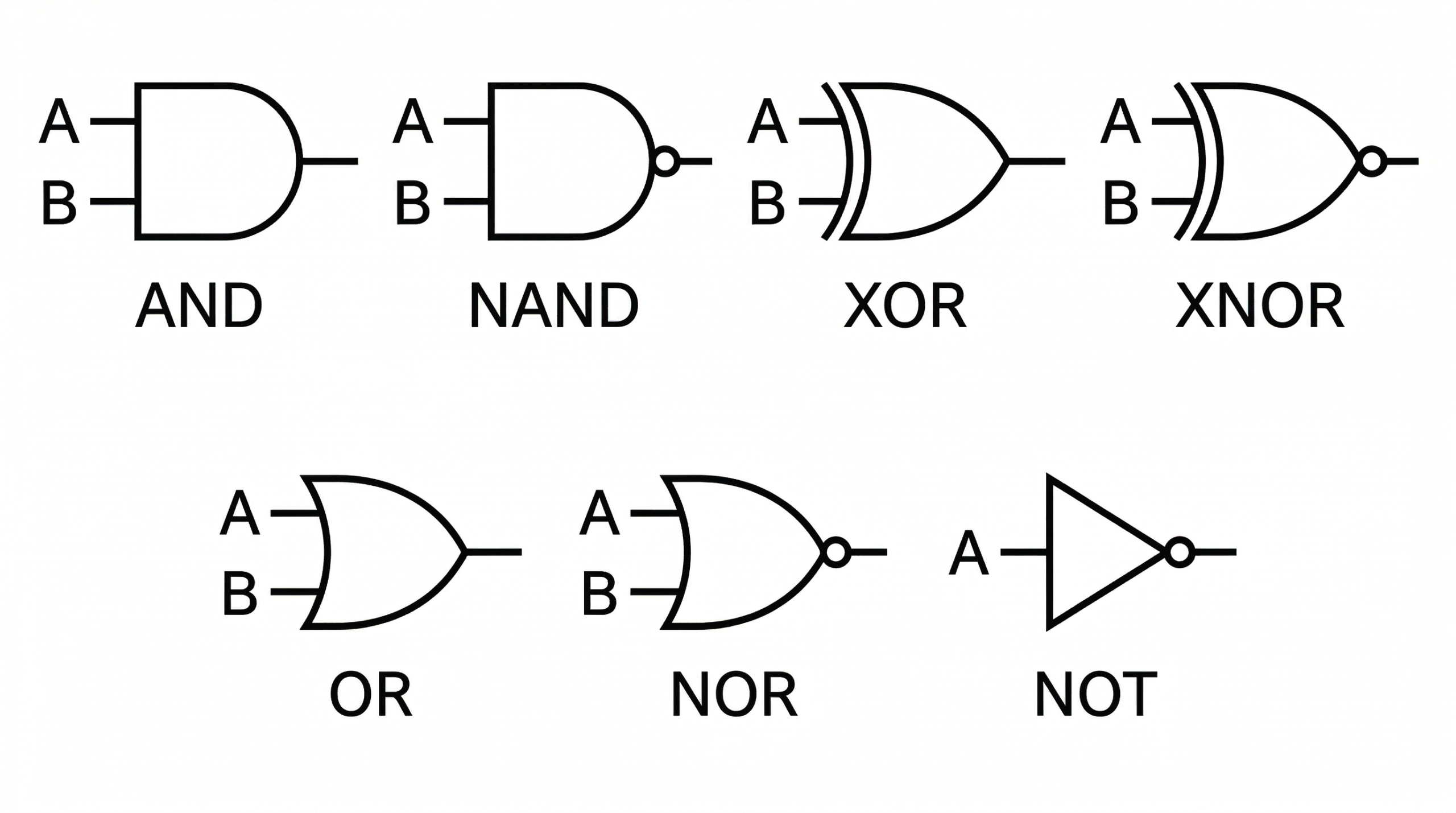
Logic gates are combinations of transistors that follow specific rules based on inputs and outputs. An AND gate only produces an output when both inputs are on. An OR gate produces an output if at least one or two inputs are on at the same time. An XOR gate, also known as an exclusive OR, only produces an output when exactly one input is on, but not two at the same time. These rules can be represented using truth tables, which map out every possible input combination to an output. While each gate can be simple on its own, combining multiple gates and inputs can allow the system to perform complex operations, and even make decisions like seen in modern-day LLMs.
As these systems continue to scale going forward in the future, so will the level of abstraction. When you connect back to AI-generated art, it changes how you look at it. What appears to be a creative output is just an advanced form of a digital output based on trillions of on and off switches. The system is not imagining anything at all, it is processing patterns, converting them into numerical form, and producing an output that fits within the rules of that structure. This also applies to digital images, music, and text. Everything is being translated into binary, then processed, and converted back into a form that we can understand.
Tool used: ChatGPT (GPT-5.2) Purpose: Structural feedback, grammar suggestions at the end, and title suggestion. All writing and ideas are my own.