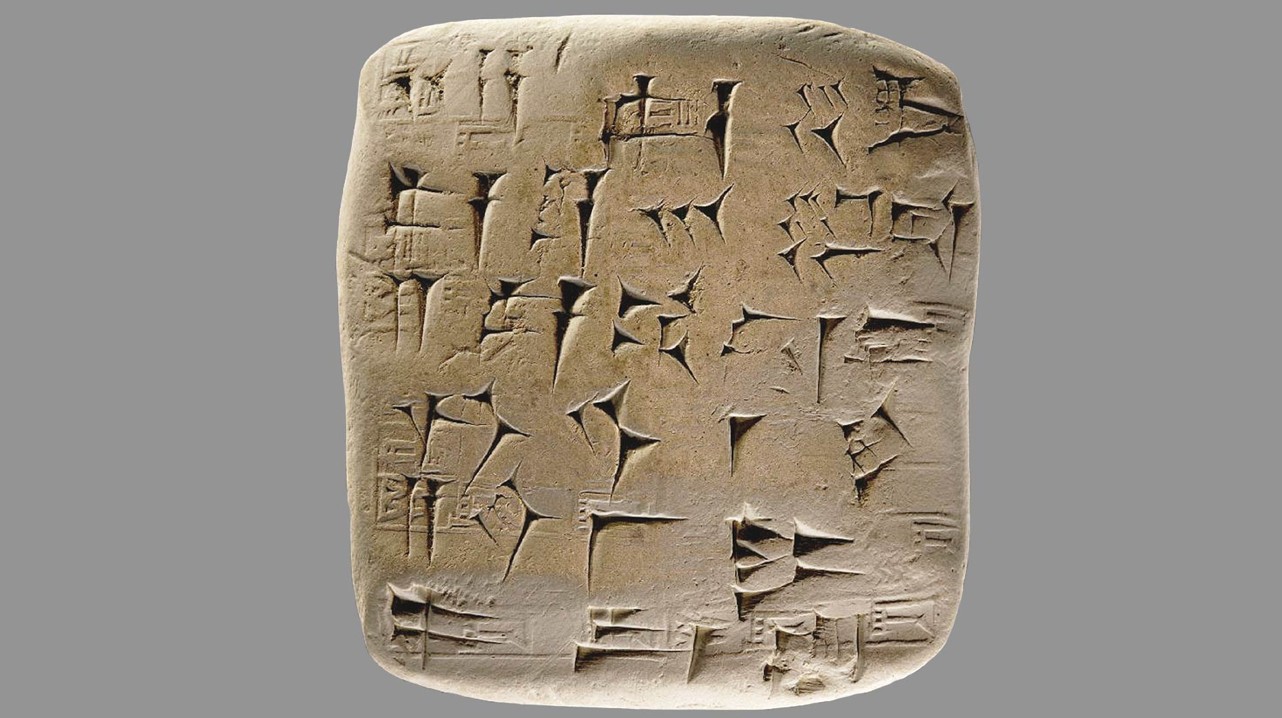
An image of the Mesopotamian clay tablets representing the first iterations of written language (Spurlock Museum, 2026).
We tend to think the digital world began with computers, but it did not. It began with people trying to solve practical everyday problems. How do we remember things? How do we make more cloth? How do we send a message faster than a horse can run? When you start to trace the path back, the digital world is not just circuits and screens with pixels. It is the scribes’ pressing symbols into clay, the silk workers in Lyon counting threads, and the painter who gave up his art career to send electricity across wires. The journey to the “digital age” was not just one invention. It was layers of creative risks and inventions stacked over thousands of years.
Roughly five thousand years ago, the Mesopotamians made what feels like the first major leap. They realized a picture did not have to represent an object, but that it could represent a sound. This realization is what changed everything. Information could now live outside of just the human brain. A message could now survive long after the speaker was gone. Writing was not just communication, but storage. It was the first time we intentionally turned reality into symbols that followed digital rules.
This was not an abstract philosophical discovery; it grew out and into different areas of social need. Think of trade, taxation, record keeping. Civilization at the time demanded structure, and writing was the solution to that. Writing was the first major leap toward what we now know as digital thinking, even if nobody would have used that word to describe it.
Fast forward to eighteenth century Lyon, where nearly a third of the inhabitants worked in silk. Brocade patterns were beautiful but painfully slow to produce. A two-person team could spend an entire day weaving, just to barely complete an inch of a brocade. That social pressure, with high demand and limited output, is what created the perfect environment for an innovation.
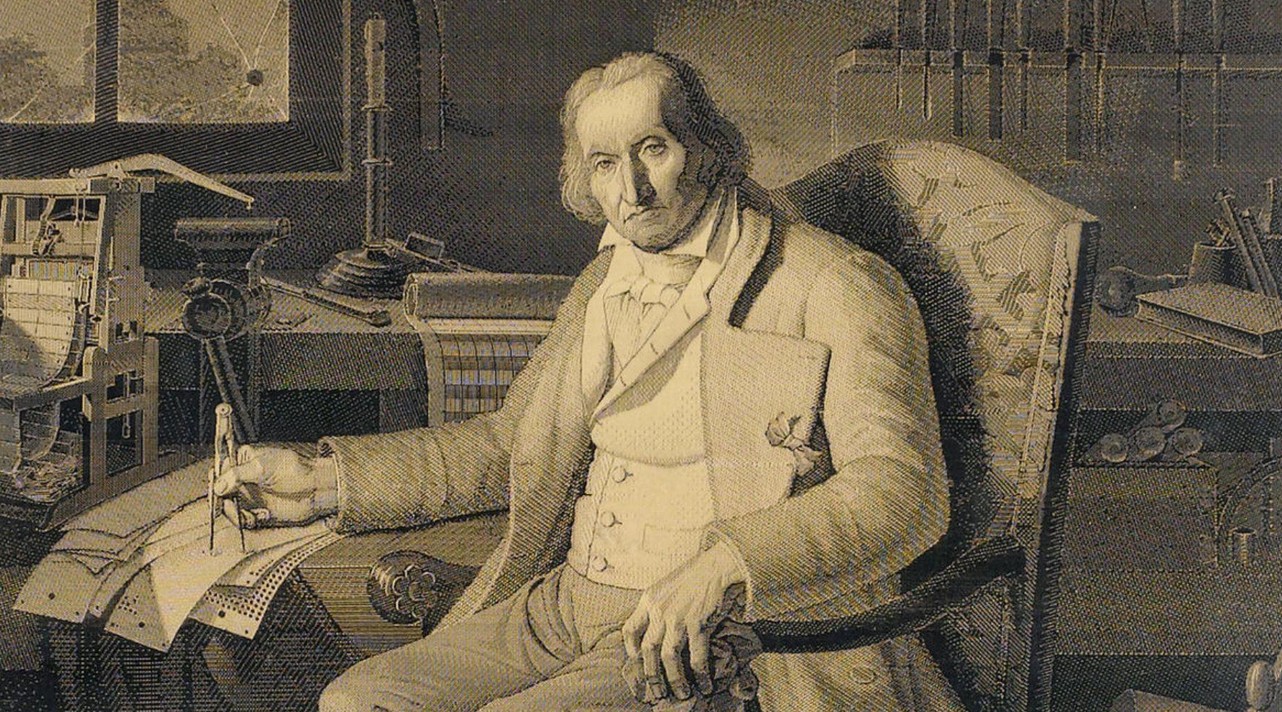
Joseph Marie Jacquard did not invent weaving, but transformed how instructions were delivered to the loom itself. His punched cards told the machine which threads to lift and which to leave down. Hole or no hole. A simple binary decision that could be repeated hundreds and thousands of times could create a complex image. Even his own portrait was woven using 24,000 punch cards.
An image of the Joseph Jacquard tapestry created using the Jacquard mechanism. If you look close enough you can see each thread in the tapestry (Achega, 2024).
What stands out is not just the mechanism, it is the ripple effect. Some traditional loom workers lost jobs because complex work became programmable. At the same time, new roles emerged: punch card designers, machine operators, and supply chain workers. The social environment shifted with that technology, like we see today with artificial intelligence and automation.
Before the telegraph, sending a message meant sending something visual and physical. A letter would have to travel across land or sea, that meant distance controlled how long information should be shared. The social consequences were very real, such as delayed news, delayed decisions, and missed moments. There was a man who received a message that his wife was sick, but upon the time it took him to reach her, she already passed away.
Samuel Morse was originally a painter. After a personal strategy due to slow communication, he shifted careers and pursed the telegraph. He did not act alone though, since his breakthrough depended on prior discoveries like the battery and the electromagnet. Technology builds on top of prior technology. That layering is a theme throughout the journey that led us to the hyper digital age we live in today.
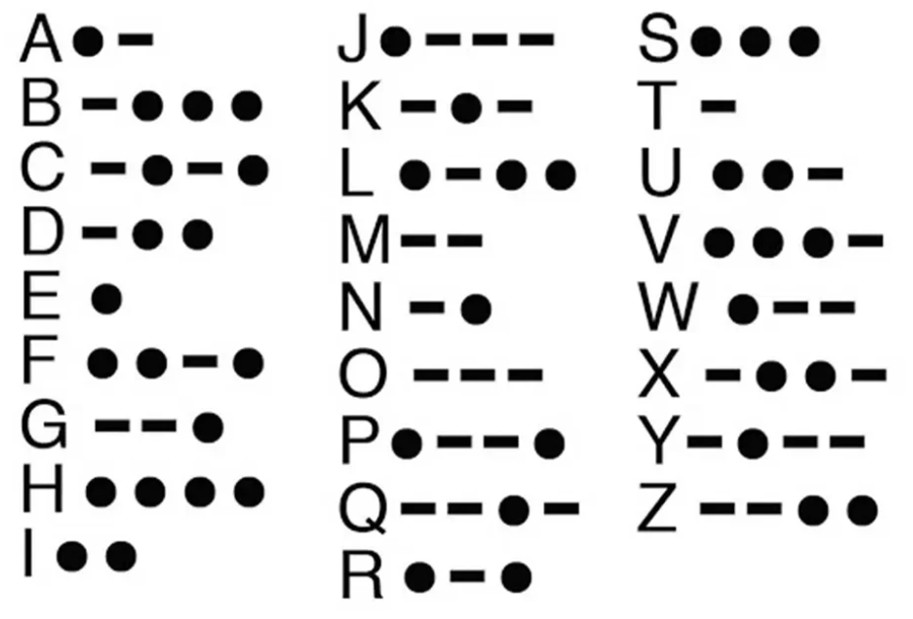
Morse code reduced language down to just dots and dashes. Although there was disagreement on if morse could word work and if it should financially be permitted, the decision was made to move forward with it. Suddenly messages could travel almost instantly across wires. In times of war, and economic expansion, that speed changed the power structures. Between the start and end of the Civil War, the number of wires increase from 300, to over 15,000. The social environment adapted to a world where information moved even faster than people and animals.
An image of morse code to visualize how letters became translates into two digital outputs, dots and lines (Retevis, 2023).
Looking at this journey, the digital world begins to feel less like a sudden explosion of innovation, and more like a long buildup of technological advances. Writing stored the thoughts of people. The loom stored patterns and automation. The Telegraph stored language in the form of bleeps. Each person that invented these systems worked within a specific social environment that was shaped by labor, trade, conflict, and over needed demand.
The digital world we live in today did not come out of nowhere. It is the result of trillions of decisions to simplify reality into symbols that machines and systems could follow. What fascinates me the most if that every step society takes forward, created disruption alongside its progress. That tension seems to be consistent throughout the entire story.
“Mesopotamian Tabley Collection.” Spurlock Museum of World Cultures, University of Illinois at Urbana-Champaign, https://www.spurlock.illinois.edu/collections/notable-collections/profiles/mesopotamian-tablet.html
“Jacquard: The Incredible Story of an Invention That Inspired the First Computer.” Achega, 13 June 2024, https://achega.com/en/blogs/news/o-fascinante-mundo-do-jacquard?srsltid=AfmBOoqGQP-cGei1IuvaI7jkSTLOHOPHCNOEUr2-bLOOwE8EXqh2vnQJ
“How to Learn Morse Code.” Retevis, 6 Jan. 2023, https://www.retevis.com/blog/how-to-learn-morse-code?srsltid=AfmBOoqNyXjvMzlD6066RtH3XlwWyuZrNbLB3PiFSVmCt3AhJTYLsW0S
Tool used: ChatGPT (GPT-5.2) Purpose: Structural feedback, grammar suggestions at the end, and title suggestion. All writing and ideas are my own.