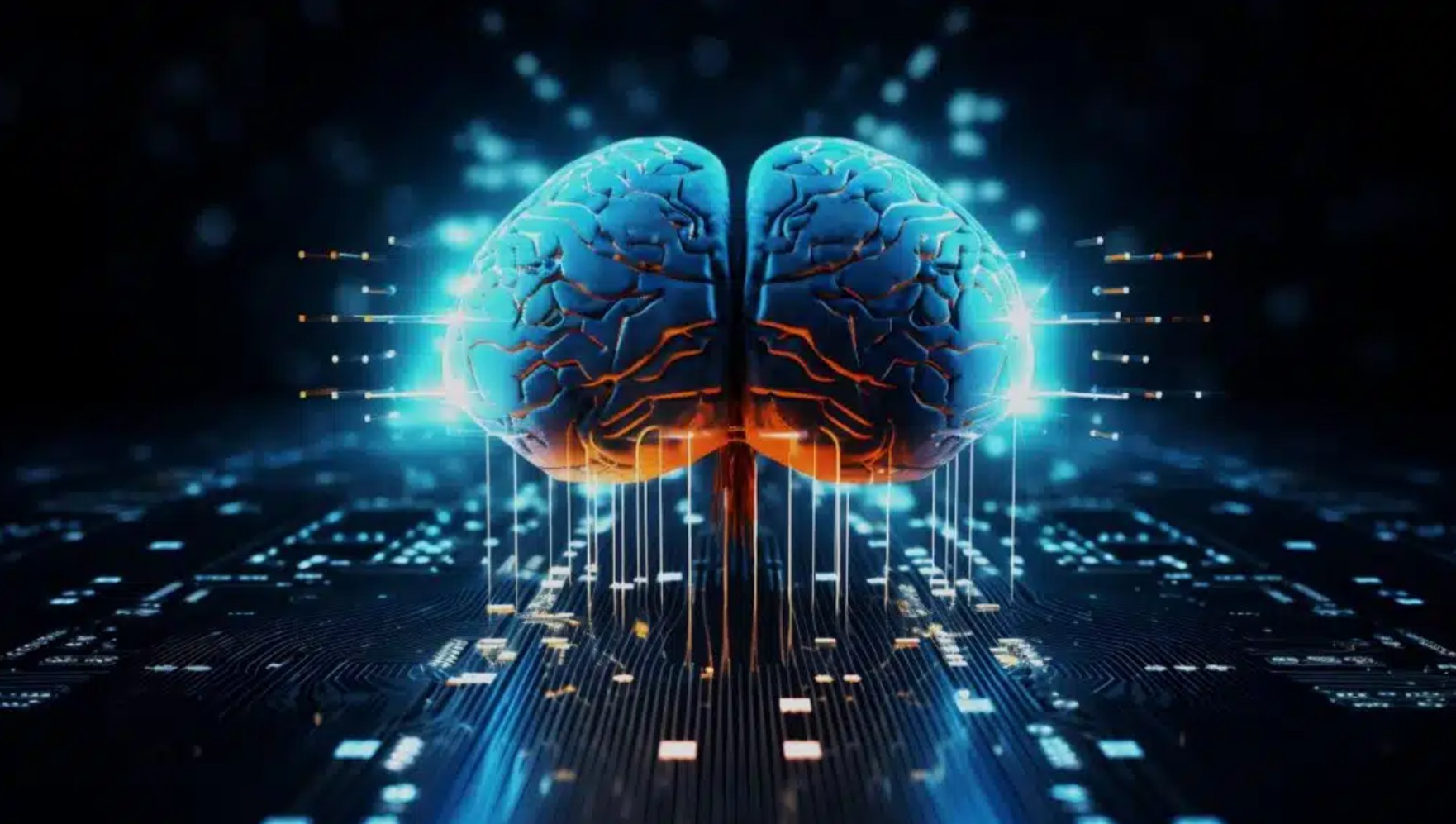
Image of artificial intelligence and a brain to depict the comparisons and difference between AI and humans (Polytechnique Insights, 2024)
Did you know that your brain runs on the same amount of power that it takes to turn on a lightbulb? Meanwhile, for a computer to have the same computational power as the human brain, it would require 10 million watts compared to just 20 watts that the human brain runs on. That’s enough to power almost 10,000 homes! An important question arises from this comparison: if digital systems and computers are supposed to be so advanced, why does the human brain still outperform computers in so many ways?
To answer that, we must first understand what digital representation is, what works well, and where it can run into issues.
A digital representation will take information from the real world and convert it into binary values. Instead of an analog way of breaking down information, information is rather broken down into steps. For computers, this means binary values and floating-point numbers, however in the brain information is represented through neural spikes. Some may find this funny as the brain comes across as more digital than the computer itself; it either has a spike, or it doesn’t. These spikes come from timing, pattern recognition, and many connections working in parallel.
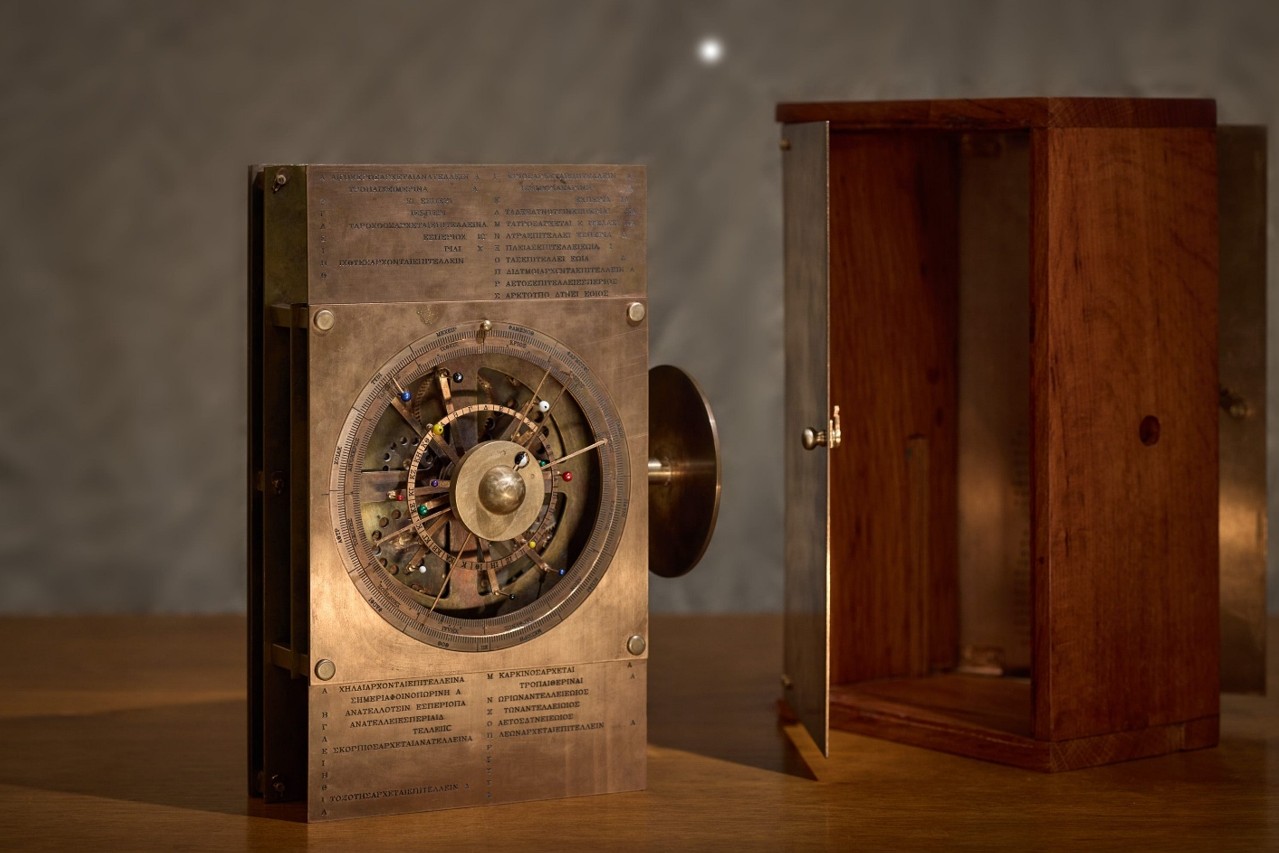
Long before modern computers, humans were already building machines that represented reality. One of those machines happens to be the Antikythera Mechanism
Image shows a recreation of the Antikythera Mechanism to depict how it looked during the times of Ancient Greece (Popular Mechanics, 2025)
The Antikythera Mechanism was built over 2,000 years ago in ancient Greece and was used to calculate the positions of the sun, moon, and planets as the year went by. By turning a crank, the machine could predict celestial events like the solar eclipse, years into the future. The Antikythera is considered an analog computer, because instead of using numbers stored inside memory, it relied on a continuous and infinite mechanical motion of turning the crank.
After people discovered the Antikythera in a shipwreck, many rethought how advanced technology was in ancient times. What was impressive was not just the physical creation of it, but the idea that someone could conceptualize how to translate the planets in the sky orbiting onto a machine using gears.
One thing was incorrect with the model however, everything orbited around the Earth rather than the Sun. Even though back then with the limited scientific knowledge, it was believed that everything orbited around the Earth. The Antikythera is a great example of the limitations of the physical analog devices. Since the underlying astronomical model was wrong, the machine could not adapt without structurally and physically rebuilding the mechanism.
That is why representation has tradeoffs and can be seen in the real world as well. Digital systems did not invent this problem, they just approached them differently.
The human brain exposes some of the biggest limitations of digital representation. For example, neurons are incredibly slow only able to transmit information at 4ms, that is roughly 1 billion times slower than computers. Yet, humans are still better at context and common sense.
Because the average human brain has 86 billion neurons with over 500 trillion synapses all working together forming parallel connections. Each neuron can connect between 1 and 17,000 other neurons. Information is not processed in a straight line, but rather steps out like tree branches across a massive network all at once. The brain does not compute exact values like a computer, but rather it reacts, adapts, and predicts just fast enough so it can survive.
Digital systems struggle to replicate the human brain because they rely on very rigid representations with exact weights and specific decimal math which makes them work well for certain tasks, but poorly for others. Quantum computers work very similar to the human brain, however they are still in development and are decades ahead of where we currently are in technology.
Modern artificial intelligence is often looked at as a digital human, but we know that artificial neural networks (ANNs) and large language models (LLMs) function very differently from our biological neurons.
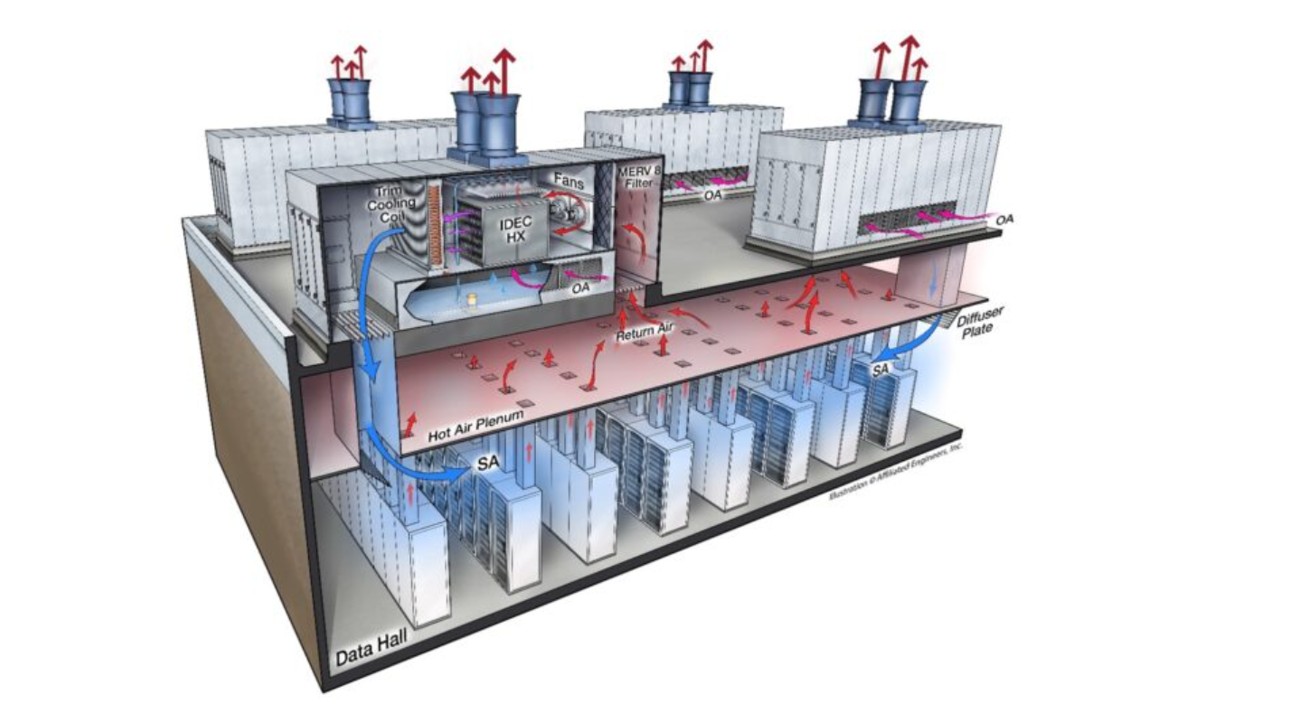
The diagram above demonstrates how much utilities are used just for modern-day artificial intelligence training. (Consulting-Specifying Engineer, 2024)
AI systems, like all other computers, rely heavily on floating-point values and trained algorithms. Synapses in the brain adjust slowly compared to AI and are limited to discrete changes. A human can learn something incredibly meaningful from a single experience, while AI requires millions of examples.
There is also the issue of energy and utilities. Training and running large AI models consumes an extraordinary amount of electricity as well as water for cooling. The brain achieves comparable pattern recognition using just a fraction of that energy like I said in the first paragraph of this blog.
What I hope you learned from this post is that digital representation is not a universal solution, but rather it is a tool that has specific strengths and weaknesses. Digital computers excel when it comes to speed, precision, and scalability which is why they dominate in modern technology. However, history and biology show that these advantages do not come without limitations. From the Antikythera Mechanism to modern artificial intelligence, representation has always had its tradeoffs. The brain sacrifices precision for quick survival while digital systems sacrifice context and adaptability for precision. Being able to understand these limits is important as AI continues to grow and become a part of our daily lives, because not everything works well when a computer tries to translate things into the real world.
Andler, Daniel, Maxime Amblard, and Annabelle Blangero. “Are Artificial Intelligence and Human Intelligence Comparable?” Polytechnique Insights, 17 Jan. 2024, https://www.polytechnique-insights.com/en/columns/science/are-artificial-intelligence-and-human-intelligence-comparable/
Orf, Darren. “2,000 Years Ago, the Greeks Built What May Be the World’s First Computer.” Popular Mechanics, 26 Nov. 2025, https://www.popularmechanics.com/science/archaeology/a69554155/antikythera-mechanism-worlds-first-computer/
Koukl, Matt, “Using Fluid Technology to Address Cooling Limitations in Data Centers.” Consulting-Specifying Engineer, 30 May 2024, https://www.csemag.com/using-fluid-technology-to-address-cooling-limitations-in-data-centers/
Tool used: ChatGPT (GPT-5.2) Purpose: Structural feedback and grammar suggestions at the end. All writing and ideas are my own.